A cat feeder looks like a simple product from the outside, but it sits at the intersection of mechanical engineering, electronics, and food safety in a way most pet accessories don’t. A dispensing mechanism has to work consistently thousands of times without jamming, a power system has to stay reliable through outages, and any bowl or storage component touching food has to meet real material safety standards. Buyers who source a wholesale cat feeder the same way they’d source a toy or a bed often end up with returns, complaints, and a product line that underperforms against better-engineered competitors.
This guide walks through the specific technical details buyers need to evaluate before committing to a bulk order, from choosing the right feeder type to what a sample inspection should actually check.
Understanding the Core Cat Feeder Types Before You Source
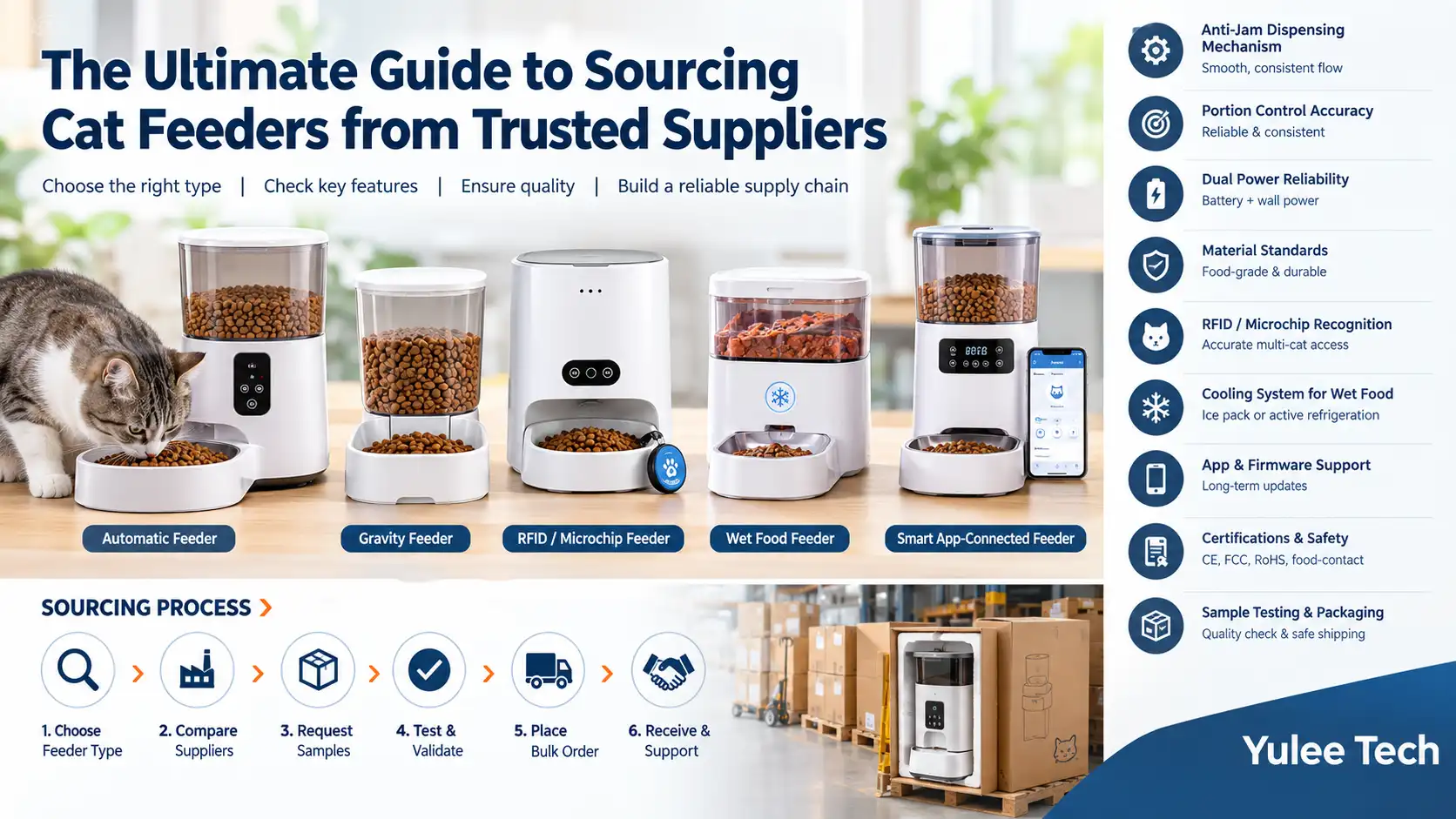
Sourcing strategy should start with a clear picture of which feeder types belong in a product line. Gravity feeders are simple and low-cost, with no electronics to source or test. Automatic timed feeders add a motor and timer that need reliability testing. RFID or microchip feeders introduce a recognition system built for multi-cat households. Wet-food feeders require a cooling mechanism most dry-food factories haven’t built before. Smart app-connected feeders add a software layer entirely separate from the physical hardware. Each type points toward a different kind of supplier, and sourcing all five from a single generalist factory rarely produces the best result across the board.
Anti-Jam Dispensing Mechanism Design and Testing
Jamming is the single most common complaint tied to automatic and gravity-fed cat feeders, and it almost always traces back to a dispensing mechanism tested against only one kibble shape and size. A well-engineered hopper accounts for a range of common kibble geometries, from small round pellets to larger irregular shapes, and uses internal baffles or agitators to prevent bridging, where food clumps together and stops flowing. Buyers should ask a supplier directly what kibble types their mechanism has been validated against, since this single detail predicts a large share of future customer complaints.
Portion Control Accuracy and Calibration Standards
For automatic feeders, portion accuracy is the core value proposition, and it needs to hold up consistently across thousands of dispensing cycles, not just the first few. A properly calibrated mechanism dispenses within a tight tolerance of the programmed amount every time, while a poorly calibrated one drifts over weeks of use as internal components wear. Buyers should request data on portion consistency testing, ideally across a sample run of repeated cycles, rather than accepting a single-use demonstration as proof of accuracy.
Dual Power Reliability – Battery Backup and Wall Power Integration
A feeder that depends on a single power source creates a real risk for the end customer: a dead battery or a power outage means a missed feeding at exactly the wrong moment. Dual power design, combining a wall adapter with a battery backup that engages automatically during an outage, addresses this directly, but the circuit design matters as much as the presence of the feature. Buyers should ask specifically how the power switchover works and whether it’s been tested under actual outage conditions, not just described in a spec sheet.
Bowl and Component Material Standards (Plastic vs Stainless Steel)
Material choice affects both hygiene and long-term durability. Stainless steel bowls resist staining and bacterial buildup better than plastic and hold up longer under daily washing, while plastic components need verified BPA-free, food-grade certification to meet safety expectations in most markets. Buyers should request test documentation confirming food-contact safety rather than accepting a verbal assurance, and should ask how internal food storage compartments, not just the visible bowl, are treated for hygiene and material safety.
RFID and Microchip Recognition Technology for Multi-Cat Feeders
Multi-cat households represent a meaningful buyer segment, and RFID or microchip feeders solve a specific problem for them by only opening for the cat whose tag or chip matches. The recognition system needs accurate read range and consistent calibration across units, since a feeder that misreads tags defeats its entire purpose. Buyers sourcing this feeder type should ask for calibration testing data and understand how the supplier handles read-range consistency across a full production batch, not just a single working sample.
Wet Food Feeder Cooling Systems – Ice Pack vs Active Refrigeration
Wet food spoils quickly at room temperature, and feeders addressing this use either replaceable ice packs or, in premium designs, active refrigeration to extend safe storage time. Ice-pack systems are simpler and lower cost but need honest testing on how long they actually maintain safe temperature in a warm room, not just a controlled lab environment. Buyers should verify a supplier’s stated cooling duration against real conditions before trusting the claim on a product label, since overstated cooling times create a genuine food safety risk for the end customer’s cat.
App Connectivity and Firmware Support for Smart Feeders
Smart, app-connected feeders introduce a software dependency that outlives the initial sale. Buyers should ask how long a supplier has actively maintained their app platform, how frequently it receives updates, and what happens to a feeder’s smart features if that app is eventually discontinued. A feeder with excellent hardware tied to an unstable or abandoned app becomes a liability for the buyer’s brand, since customer frustration lands on whoever sold the product, not the software team behind it.
Certifications and Safety Documentation to Request (CE, FCC, RoHS, Food-Contact)
A trustworthy supplier can provide documentation covering electrical safety and food-contact material compliance, commonly referenced through certifications like CE, FCC, or RoHS depending on the target market. These aren’t just formalities. They protect a buyer from liability and are frequently required for customs clearance or retail partnerships in specific regions. Buyers should treat a supplier’s reluctance to share this documentation as a clear warning sign rather than a detail to work around.
Sample Evaluation – What to Physically Test Before Bulk Ordering
No specification sheet fully replaces hands-on testing. Buyers should run a sample through multiple dispensing cycles to check consistency, inspect seal quality around battery compartments and electronic housing, and listen for unusual motor noise or vibration that could signal a manufacturing shortcut. A sample that performs flawlessly once but shows inconsistency across repeated use is a strong signal of what an entire bulk order will look like once it reaches customers.
Packaging and Shipping Considerations for Electronic Feeder Units
Electronic components add a layer of shipping risk that simpler pet products don’t have, particularly around moisture exposure and impact damage during freight handling. Suppliers experienced with cat feeders typically use individual unit wrapping, corner protection for bulk pallets, and moisture-resistant packaging for electronic housings. Buyers should ask directly how a supplier packages mixed orders spanning both simple gravity feeders and more complex electronic models, since inconsistent packaging standards across a single shipment often signal gaps in overall quality control.
What Separates a Dependable Cat Feeder Supplier from the Rest
Unlike many pet accessories, a cat feeder combines mechanical reliability, electronic durability, and food safety in a single product, and a weak link in any one of those areas shows up quickly once units reach real customers. Suppliers who can speak specifically to dispensing testing, power reliability, and certification documentation, rather than general claims about quality, are the ones building products that hold up past the first review cycle.
Talk Specs, Not Just Price
Yulee Tech supplies cat feeders built around the exact standards covered in this guide, from anti-jam dispensing testing to certified food-contact materials. Reach out to discuss samples, specifications, and your next bulk order.