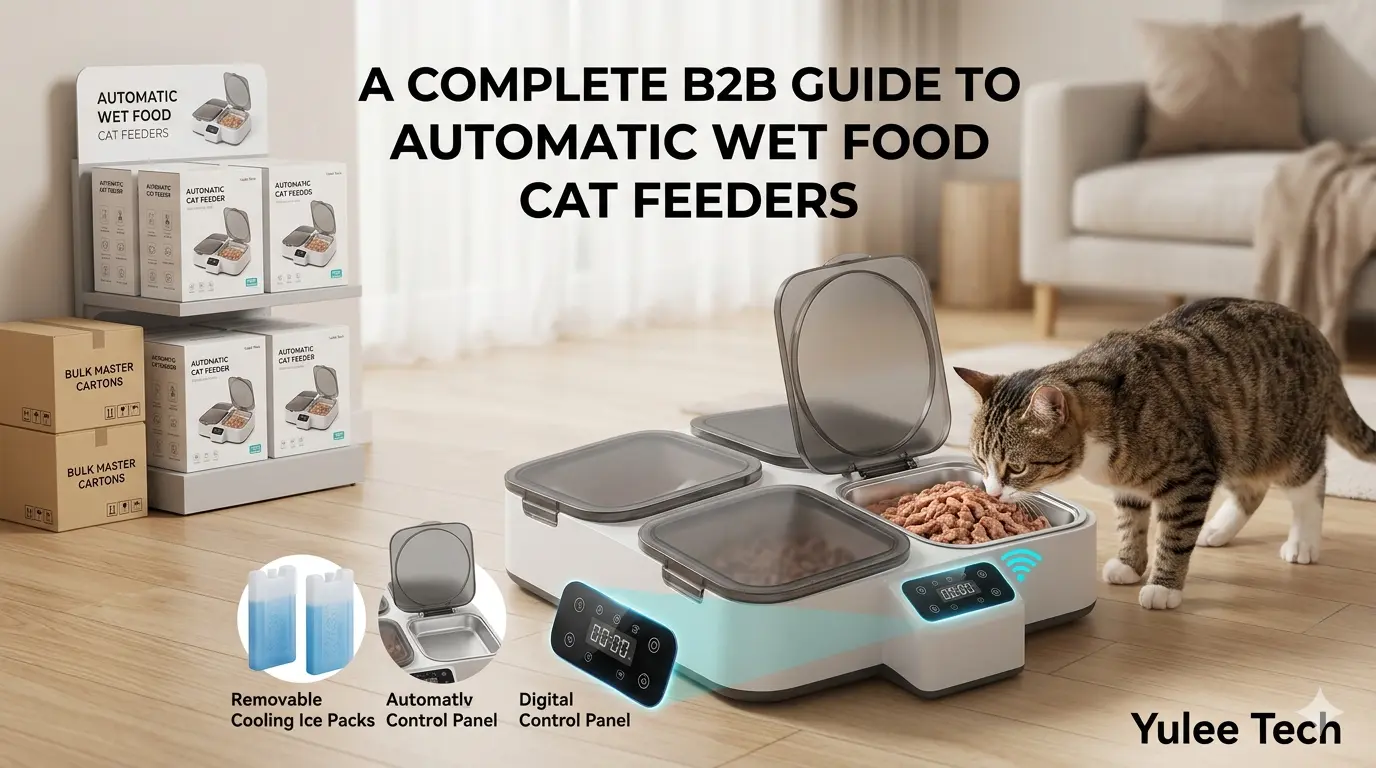
The pet care industry is seeing a massive shift toward fresh and wet food diets. Cat owners now prefer wet food because it provides essential hydration and high protein. However, serving wet food presents a major challenge for busy professionals. Wet food spoils quickly at room temperature and attracts pests. This is where a wholesale cat feeder solution becomes vital for B2B buyers and retailers. These devices use advanced cooling technology and airtight seals to keep meals fresh for hours. Businesses that source these feeders tap into a growing market of health-conscious pet parents.
Modern automatic wet food feeders offer programmable timers and ice pack compartments. They ensure that cats receive their specific portions at the right time. For importers and distributors, providing reliable wet food automation is no longer optional. It is a necessity for staying competitive in the smart pet tech landscape. This guide explores the technical specs, manufacturing standards, and market trends of these essential devices.
02. Introduction to Automatic Wet Food Cat Feeders
Automatic feeders for cats are changing how people care for their pets. In the past, most machines only worked with dry kibble. Now, technology allows machines to handle wet food safely. This is a big step forward for pet health. Wet food has more water than dry food, which helps cats stay healthy.
2.1. What Is an Automatic Wet Food Cat Feeder
An automatic wet food cat feeder is a machine that gives a cat wet food at a set time. It usually has a lid that stays closed until the timer goes off. When the time comes, the lid opens or a tray rotates. This lets the cat eat its meal. These machines are built to handle moisture and soft textures. They often include parts that keep the food cool so it does not go bad.
2.2. How Wet Food Feeders Differ from Dry Food Feeders
Dry food feeders usually have a large tank at the top. The food drops down into a bowl using gravity or a spinning wheel. Wet food feeders cannot work this way because wet food is sticky. Instead, wet food feeders use trays. You put the food directly into the tray. The machine then protects that tray until the feeding time. Wet food feeders also need cooling systems, which dry feeders do not need.
2.3. Growing Demand for Smart Wet Food Feeding Solutions
More people are buying smart pet products than ever before. Owners want to make sure their cats eat well even when no one is home. Since many vets recommend wet food for urinary health, the demand for these feeders is rising. Retailers are seeing more requests for feeders that can connect to phones. This allows owners to check if their cat ate while they are at work.
03. Key Components of an Automatic Wet Food Feeder
Every high-quality feeder has specific parts that make it work well. When buying in bulk, you must check these components to ensure they are durable.
3.1. Food Storage Compartment and Portion Trays
The most important part is the tray where the food sits. Most wet food feeders have circular trays with multiple sections. Each section holds one meal. The size of these sections matters for portion control. A good tray should be deep enough to hold a full can of cat food without spilling.
3.2. Cooling or Ice Pack System for Freshness
Wet food can spoil in just a couple of hours if it is warm. To fix this, manufacturers put a space under the food tray for ice packs. These ice packs keep the temperature low. Some advanced models even use electric cooling systems, similar to a small fridge. This keeps the meat and gravy fresh and safe for the cat to eat later in the day.
3.3. Programmable Timer and Control Panel
The timer is the brain of the machine. It tells the tray when to move or the lid when to open. Most feeders have a digital screen where you can set specific hours. For example, you can set it to open at 8:00 AM and 6:00 PM. The buttons should be easy to press and the screen should be easy to read.
3.4. Smart Connectivity (App / WiFi / Bluetooth)
Many new models now have WiFi. This lets the user control the feeder from an app on their smartphone. You can change the feeding time from anywhere in the world. Some apps even send a notification to your phone when the cat has finished eating. This gives pet owners peace of mind.
3.5. Power Supply Options (Battery vs Adapter)
Most feeders use a wall adapter for steady power. However, it is important to have a battery backup. If the electricity goes out, the batteries keep the timer running. This ensures the cat never misses a meal. B2B buyers should look for models that offer both options for better reliability.
04. Types of Automatic Cat Feeders for Wet Food
There are several designs available in the market. Each one has different benefits depending on the needs of the pet owner.
4.1. Rotating Tray Wet Food Feeders
This is the most common type. It looks like a round dish with a cover. Under the cover, there are five or six food slots. At the scheduled time, the tray rotates to show a new slot filled with food. These are simple, reliable, and easy for cats to understand.
4.2. Ice Pack Based Wet Food Feeders
These feeders rely on gel ice packs to keep food cold. You freeze the packs overnight and place them under the food tray in the morning. They are great for people who are away for 8 to 12 hours. They do not require a lot of power and are usually very affordable.
4.3. Refrigerated Automatic Feeders
These are the premium versions of wet food feeders. They have a built-in cooling compressor or a thermoelectric cooler. They do not need ice packs because they stay cold as long as they are plugged in. These are perfect for owners who go away for a whole weekend. They keep the food at a safe temperature for a much longer time.
4.4. Smart App-Controlled Wet Food Feeders
These feeders focus on data and control. They connect to the home internet. Owners can see a history of when the cat ate. Some even have cameras built in. This allows the owner to watch the cat eat through their phone screen. This is a very popular feature in the modern pet tech market.
05. Material and Build Quality Considerations
The materials used in a feeder affect both safety and how long the product lasts. Quality is the top priority for any professional buyer.
5.1. Food-Grade Plastic vs Stainless Steel Trays
Most feeders use plastic because it is light and cheap to make. However, many owners prefer stainless steel. Stainless steel is better because it does not get tiny scratches where bacteria can grow. Bacteria in scratches can cause cat acne. Offering both options is a good strategy for distributors.
5.2. BPA-Free Materials and Safety Standards
It is vital that all plastic parts are BPA-free. BPA is a chemical that can be harmful to animals. High-quality manufacturers always provide certificates to prove their plastic is safe for food contact. This is a major selling point for health-conscious customers.
5.3. Odor Resistance and Hygiene Factors
Wet food smells strong. A good feeder must have a tight seal when it is closed. This keeps the smell inside the machine and prevents the whole house from smelling like cat food. It also keeps flies and ants away from the meal. Materials that do not soak up odors are the best choice.
5.4. Durability for Long-Term Pet Use
Cats can be aggressive when they are hungry. They might paw at the machine or try to flip it over. A good feeder needs a heavy base so it stays in place. The lid should be strong enough that a cat cannot pry it open with its claws.
06. Key Features Buyers Look for in Wet Food Cat Feeders
When retailers choose which products to stock, they look for specific features that solve problems for their customers.
6.1. Portion Control and Feeding Schedule Programming
Obesity is a big problem for house cats. Feeders help solve this by giving the exact amount of food needed. A good machine allows the user to set small meals throughout the day. This keeps the cat’s metabolism healthy and prevents overeating.
6.2. Freshness Preservation for Wet Meals
The main goal is keeping the food fresh. Customers look for feeders that have thick lids and good insulation. If the food stays moist and cold, the cat will be happy to eat it. If the food dries out, the cat might refuse it, which makes the feeder useless.
6.3. Anti-Jam and Secure Lid Mechanisms
If a tray gets stuck, the cat does not get fed. Reliable feeders have sensors to make sure the tray moves correctly. Also, the lid must be “pet-proof.” Some cats are very smart and can figure out how to open simple latches. A secure locking system is a must-have feature.
6.4. Easy Cleaning and Dishwasher-Safe Components
Wet food is messy. It leaves behind oil and bits of meat. Owners want to be able to take the tray out and put it in the dishwasher. If a feeder is hard to clean, people will stop using it. Brands should emphasize how easy it is to take the machine apart for washing.
6.5. Quiet Operation for Indoor Use
Some machines make a loud grinding noise when they move. This can scare nervous cats. High-quality feeders use quiet motors. The cat should hear a soft sound that lets them know it is dinner time without being startled.
07. Manufacturing Process of Automatic Wet Food Cat Feeders
Understanding how these products are made helps B2B buyers talk to suppliers and check for quality.
7.1. Product Design and Engineering
The process starts with a 3D design. Engineers decide where the motor, the battery, and the food trays will go. They test the design to make sure it is stable and that the lid closes perfectly. This stage is where the “look” of the product is decided.
7.2. Injection Molding for Plastic Components
Most of the body is made using injection molding. Liquid plastic is poured into a metal mold and then cooled. This creates the strong outer shell and the internal trays. This process allows for making thousands of identical parts very quickly.
7.3. Electronic System Integration
After the plastic parts are ready, the electronics are added. This includes the circuit board, the wiring, and the motor. If the feeder is a smart model, the WiFi chip is also installed here. Every electronic part must be tested to make sure it works with the software.
7.4. Assembly and Quality Control Procedures
Workers put all the pieces together on an assembly line. Once the feeder is built, it goes through quality control. Someone tests the timer, the motor, and the seal. They also check for any sharp edges or visual defects. Only the best units are packed for shipping.
08. Customization Options for B2B Buyers
Many manufacturers offer ways to make the product unique to your brand. This is very helpful for building your own identity in the market.
8.1. Private Label Branding
This is where the manufacturer puts your logo on the feeder. You can choose the colors of the plastic to match your brand. This allows you to sell a unique-looking product without having to design one from scratch.
8.2. Custom Packaging and Retail Boxes
The box is the first thing a customer sees. You can request custom boxes with your own language, photos, and descriptions. Good packaging protects the product during shipping and makes it look professional on a store shelf.
8.3. OEM and ODM Product Development
If you have a totally new idea for a feeder, you can use ODM services. This means the manufacturer helps you design and build a brand-new product from your ideas. This is more expensive but gives you a product that no one else has.
8.4. Feature Customization for Different Markets
Different countries have different needs. You might want to change the plug type for the UK or the US. You might want to add a specific language to the app. Manufacturers can adjust these features based on where you plan to sell the feeders.
09. Certifications and Compliance for International Markets
Selling electronics and food-contact items requires following strict rules. You must ensure your supplier has the right paperwork.
9.1. Food Safety and Material Certifications
Trays must be certified for food safety. In the US, this is often FDA approval. In Europe, it might be LFGB. These tests prove that no toxins leak from the plastic into the cat’s food.
9.2. Electrical Safety Standards
Since these machines plug into the wall, they need safety marks like CE, FCC, or UL. These show that the device will not catch fire or give an electric shock. This is very important for insurance and legal reasons when importing.
9.3. Import Regulations for Pet Feeding Devices
Every country has its own rules for importing electronics. Some require specific labels on the box. Others might want to see testing reports for the batteries. Always check with a local customs expert before placing a large order.
9.4. Compliance Requirements for EU and US Markets
The EU has very strict rules about recycling electronics (WEEE) and hazardous substances (RoHS). The US has different rules about radio frequencies if the device has WiFi. Making sure your product meets these rules avoids big fines at the border.
10. Applications and Target Markets
Knowing who will buy these feeders helps you create better marketing and sales plans.
10.1. Pet Owners with Busy Schedules
The biggest market is people who work long hours. They cannot get home in time for the afternoon feeding. An automatic feeder takes away the guilt of leaving a cat hungry.
10.2 Multi-Cat Households
In houses with many cats, feeding time can be crazy. Some owners use multiple feeders with microchip readers. This ensures each cat only eats its own food and no one steals a meal.
10.3. Veterinary Clinics and Pet Boarding Facilities
Vets and pet hotels need to feed many animals at exact times. Using automatic feeders saves time for the staff. It also ensures that a cat on a strict medical diet gets its food on time every single day.
10.4. Pet Retail Chains and Online Stores
Retailers are always looking for the “next big thing” in pet tech. Smart wet food feeders are high-ticket items. They offer better profit margins than simple plastic bowls. Online stores like these products because they are easy to ship and have high demand.
11. Sourcing Automatic Wet Food Cat Feeders from Manufacturers
Buying from a factory requires a careful process to make sure you get what you pay for.
11.1 Evaluating Manufacturer Capabilities
Do not just look at the price. Look at the factory’s history. Do they have modern machines? Do they have enough staff? Ask for photos of their production line. A good manufacturer will be happy to show you how they work.
11.2. MOQ Requirements for Wholesale Orders
MOQ stands for Minimum Order Quantity. Most factories require you to buy at least 200 to 500 units. If you want custom colors or logos, the MOQ might be higher. Always negotiate this based on your budget and storage space.
11.3. Sample Testing and Product Evaluation
Never buy a thousand units without seeing a sample first. Order one or two units and test them yourself. Put wet food in them and see if the ice packs really keep it cold. Check if the timer is accurate. This small step saves you from big mistakes later.
11.4.Quality Assurance and Production Lead Times
Ask the manufacturer how they handle bad units. A good factory has a low defect rate. Also, check how long it takes to make the goods. Normally, it takes 30 to 45 days to produce a large order. Plan your inventory so you do not run out of stock.
12. Packaging and Logistics for Bulk Orders
Shipping electronics and plastic items across the world requires good planning to avoid damage.
12.1. Protective Packaging for Electronics
Each feeder should be wrapped in foam or bubble wrap inside its retail box. This protects the screen and the internal motors from vibrating too much during the journey on a ship or truck.
12.2. Carton Packing for Wholesale Distribution
Retail boxes are then put into large “master cartons.” These cartons should be strong and double-walled. They need to be able to be stacked high in a warehouse without crushing the boxes at the bottom.
12.3. Shipping Methods for International Buyers
For small, fast orders, air freight is best. For large wholesale orders, sea freight is much cheaper. Make sure you understand the shipping terms, like FOB or CIF, so you know who is responsible for the goods during the trip.
12.4. Reducing Freight Costs in Bulk Shipments
Shipping costs depend on size and weight. Manufacturers can help by designing packaging that is as small as possible. If you can fit more units into one shipping container, your cost per unit goes down. This helps you offer better prices to your customers.
13. Common Challenges in Wet Food Feeding Automation
Nothing is perfect, and there are some problems that manufacturers and buyers are still working to solve.
13.1. Maintaining Food Freshness for Long Periods
Even with ice packs, wet food cannot stay fresh forever. Usually, 24 hours is the limit. Some customers want it to last longer. This is why refrigerated models are becoming more popular, even though they cost more.
13.2. Preventing Food Spoilage and Odor
If a cat does not finish its meal, the leftovers stay in the tray. If the lid closes on old food, it can smell very bad. Owners need to be reminded to clean the trays every day. Manufacturers are trying to use better seals to hide these smells.
13.3. Cleaning and Maintenance Issues
Some feeders have too many small parts. This makes them hard to wash by hand. If food gets stuck in the gears, the machine might break. Simple designs with removable, dishwasher-safe trays are always the winners in this category.
13.4. Reliability of Timers and Smart Systems
Electronic glitches happen. If the WiFi goes down, some smart feeders might stop working. The best feeders have internal memory. This means they will still feed the cat even if the internet is disconnected. This is a critical safety feature.
14. Market Trends in Automatic Cat Feeding Technology
The industry is moving fast. Staying ahead of these trends helps you pick the best products to sell.
14.1. Smart IoT-Based Feeding Systems
IoT stands for Internet of Things. This means the feeder talks to other devices. For example, a feeder could tell a smart water fountain to turn on when the cat is eating. Everything is becoming connected in the modern home.
14.2. Refrigerated Pet Feeders for Wet Food
As mentioned before, active cooling is the future. People are moving away from ice packs and toward real refrigeration. These machines are becoming smaller and quieter, making them better for home use.
14.3. Integration with Pet Health Monitoring Apps
Some feeders now weigh the food before and after the cat eats. They tell the owner exactly how many calories the cat consumed. This data can be shared with a vet to help manage the cat’s health.
14.4. Sustainable Materials and Eco-Friendly Designs
Environmentally friendly products are very popular. Buyers are looking for feeders made from recycled plastics or biodegradable materials. Even the packaging is moving away from plastic and toward cardboard.
15. Tips for Importers and Distributors
To be successful, you need more than just a good product. You need a good business strategy.
15.1. Choosing the Right Product Specifications
Do not try to sell the most expensive model to everyone. Have a range of products. Offer a basic ice pack model for budget buyers and a high-end smart model for tech lovers. This helps you reach more customers.
15.2. Understanding Pricing and Margin Structure
Calculate all your costs before setting a price. This includes the factory price, shipping, taxes, and marketing. Make sure there is enough profit left for you and the retailers you sell to.
15.3. Building Long-Term Supplier Partnerships
Do not jump from one factory to another just to save a few cents. Building a relationship with one good supplier is better. They will give you better service, faster shipping, and help you if something goes wrong.
15.4. Managing Inventory for Pet Product Retail
Pet products sell well all year round, but demand might go up during holidays when people travel. Make sure you have enough stock before the busy summer and winter travel seasons.
Conclusion
The market for automatic wet food feeders is expanding quickly. As more owners realize the health benefits of wet food, they will look for ways to make feeding easier. This creates a massive opportunity for B2B buyers to provide high-quality, reliable solutions.
Future Opportunities in Smart Wet Food Feeding Solutions
In the future, we will see even more AI integration. Feeders might use cameras to recognize which cat is eating and adjust the portion automatically. This technology is already starting to appear. Businesses that invest in these smart solutions now will be the leaders of the market tomorrow.
Why Automatic Wet Food Feeders Are a Growing B2B Opportunity
Buying these products in bulk allows you to offer a specialized solution to a common problem. It is not just about selling a bowl; it is about selling health and convenience. With the right manufacturing partner and a focus on quality, you can build a very successful brand in the pet tech industry.
Get the Best Wholesale Cat Feeder Solution for Your Business
Buying the right products is only half the battle. You also need a partner who understands the B2B landscape and global shipping. Whether you are looking for private label options or high-tech smart feeders, choosing a supplier with a proven track record is the best way to grow your brand and keep your customers happy.
If you are ready to expand your pet product line, now is the time to act. Contact the experts at Yulee Tech to discuss your specific needs and get a quote for your first bulk order. We help businesses source the highest quality pet technology that meets international safety standards and satisfies even the most demanding cat owners.