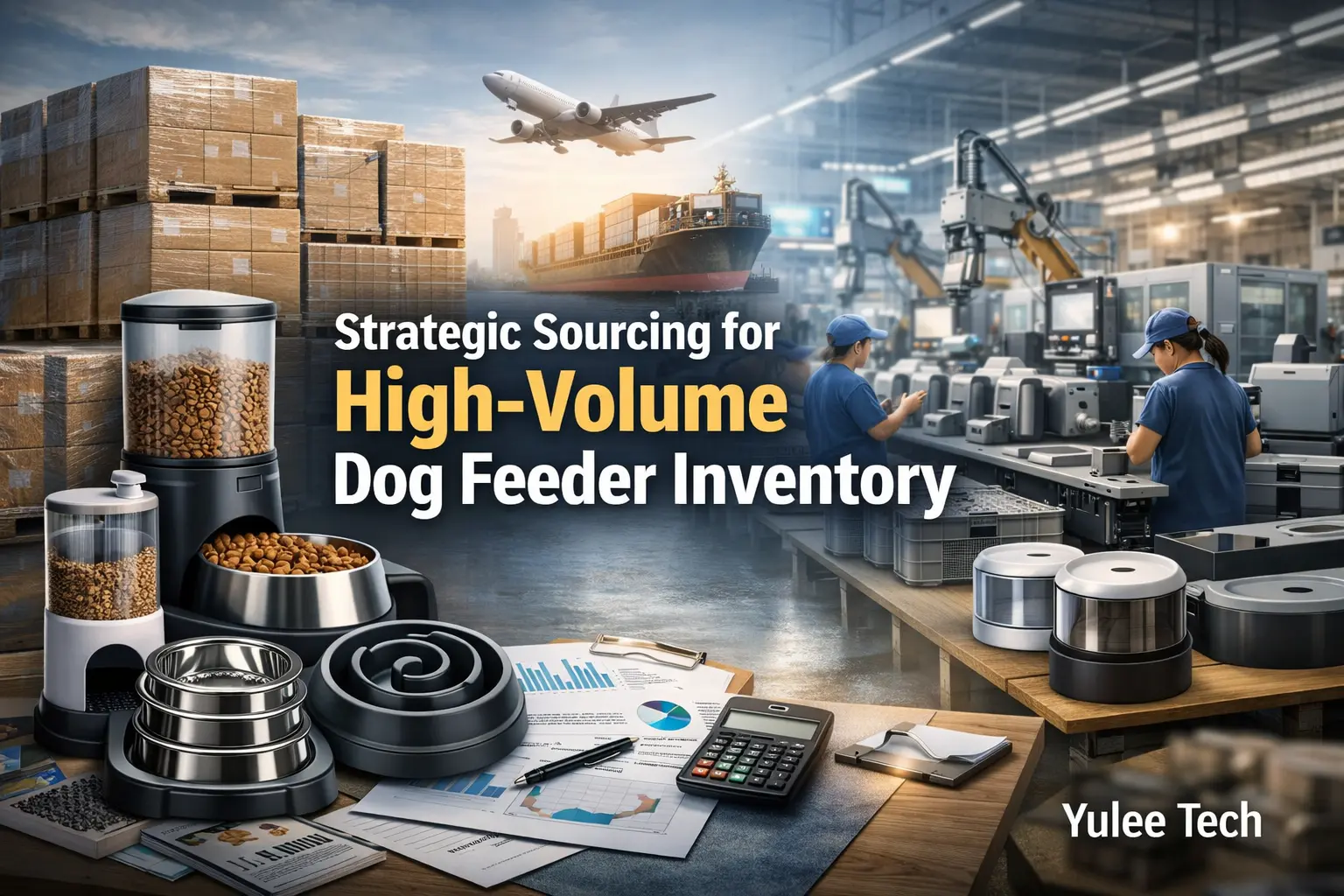
When you buy pet products in huge quantities, you face tough business challenges. Finding the right pet supplies requires a smart plan. This is especially true for items like automatic pet bowls, elevated dog stations, and stainless steel dog dishes. When your business buys hundreds or thousands of dog feeders at once, any small mistake in product quality, factory shipping, or communication can cause big losses. This detailed guide covers the absolute facts of premium wholesale dog feeder sourcing to help you manage your bulk inventory successfully.
Managing a large supply of dog feeding equipment demands deep knowledge about the global supply chain. You must study factory capabilities, pet material safety standards, and logistical shipping steps. Every single choice impacts your business profits and customer satisfaction. By understanding how to work directly with commercial manufacturers, verify product certifications, and negotiate bulk costs, your business can secure a steady flow of high-quality goods. This setup ensures you get top-tier products that stand out in the competitive retail market.
01. Understanding the Global Dog Feeder Manufacturing Landscape
The global dog feeder market relies heavily on specific industrial hubs. Most high-volume dog feeder manufacturing happens in regions with strong raw material access and advanced machinery. For business buyers, identifying where these factories operate gives a clear commercial advantage. Knowing these locations helps you calculate shipping times and understand regional manufacturing strengths.
|
Region/Hub |
Primary Material Specialization |
Core Manufacturing Strength |
|
Zhejiang, China |
Plastics and Electronic Parts |
High-volume automation, low cost |
|
Guangdong, China |
Premium Stainless Steel & Ceramics |
High-end finishing, strict QA |
|
Punjab, India |
Heavy-Duty Metalware & Iron |
Durable rust-proof pet dishes |
When you look at the factory supply network, facilities generally fall into two main groups. Some factories specialize in plastic molding and injection processes. These factories are perfect for sourcing automatic dog feeders with digital timers and electronic components. Other regions focus entirely on metallurgy. These plants produce heavy-gauge stainless steel dog bowls that resist rust and scratches. Matching your product design with the correct regional hub prevents delays and ensures the factory utilizes the right machinery for your goods.
02. Material Safety and Compliance Standards for Dog Products
Dogs use feeding dishes every single day, so material safety is the most critical factor in product sourcing. Poor quality materials can leach harmful toxins into dog food or water, which destroys your brand reputation instantly. Large buyers must verify that every batch of inventory meets international consumer safety laws before the goods leave the factory floor.
2.1. Plastic Compounds and Testing Requirements
Plastic dog feeders must utilize food-grade polymers. The most common safe plastics are Polypropylene and Acrylonitrile Butadiene Styrene. You must require factories to provide certified laboratory test results for these materials.
- BPA-Free Certification: Ensure the plastic does not contain Bisphenol A, which causes hormonal imbalances in animals.
- FDA Food-Contact Compliance: The material must meet United States Food and Drug Administration standards for food contact surfaces.
- RoHS Directive: For electronic smart dog feeders, all internal wiring and circuit boards must comply with the Restriction of Hazardous Substances to avoid heavy metals.
2.2. Stainless Steel Grades and Corrosion Resistance
Stainless steel is highly popular because it is durable and easy to clean. However, some factories use cheap metal alloys that look like stainless steel but rust within weeks.
- 304 Grade Stainless Steel: This is the industry standard for high-quality dog bowls. It contains high levels of chromium and nickel, which provide excellent resistance to rust and acid corrosion from wet dog food.
- 201 Grade Stainless Steel: This is a cheaper alternative that contains less nickel. It is much more likely to develop rust spots in humid environments or when exposed to salty wet food. Always verify the exact metal grade through chemical testing.
03. Assessing Factory Capacity and Quality Control Processes
A factory might send you a perfect sample product, but that does not guarantee they can produce ten thousand identical items under a tight deadline. You must evaluate a supplier’s production capacity and quality assurance systems before signing a high-volume contract.
3.1. Evaluating Daily Production Output
You need to know the number of injection molding machines or hydraulic presses the factory operates. Ask for their monthly maximum capacity and their current order book availability. A reliable manufacturer should have enough operational machinery to handle your large scale orders without pushing back your delivery dates for other clients.
3.2. Implementing Strict In-Line Inspection Protocols
Quality control should happen during the production process, not just at the very end. You can hire third-party inspectors to check the items at different manufacturing stages.
Production Start —> 20% Production Check —> 80% Packaging Check —> Final Loading Audit
(Check raw materials) (Inspect product mold) (Verify box strength) (Seal shipping container)
During the middle of the production run, inspectors check for physical defects like sharp plastic edges, uneven metal polishing, or faulty electronic dog feeder sensors. Catching errors early allows the factory to fix the machinery setup before thousands of defective units are finished and boxed.
04. Logistics and Supply Chain Optimization for Bulk Orders
Shipping large quantities of heavy or bulky items requires careful logistical planning to keep freight costs low. Dog feeders take up significant physical volume, so maximizing container space is essential for maintaining healthy profit margins.
4.1. Container Space Optimization and Packaging Design
Work closely with the factory packaging engineers to design retail boxes that fit together tightly. Eliminate empty air space inside the outer shipping cartons.
If you source heavy stainless steel dog bowls, look into stackable designs. Nesting bowls inside one another saves massive amounts of space. This nesting technique allows you to pack more units into a single twenty-foot or forty-foot ocean container, which directly lowers the shipping cost per item.
4.2. Managing Lead Times and Seasonal Demand Fluctuation
The pet industry experiences high sales volumes during specific times of the year, particularly before the winter holidays. You must plan your production timeline around global factory schedules.
For example, many Asian factories close completely for two to three weeks during the Lunar New Year holiday. Production stops entirely, and local ports face severe backlogs. To prevent your warehouse from running completely out of stock, place your high-volume orders at least four months before your peak retail season begins.
05. Financial Negotiations and Structuring Bulk Contracts
Buying dog feeders in large volumes gives you strong bargaining power, but you must structure your financial agreements carefully to protect your capital.
5.1. Understanding Tiered Pricing and Economies of Scale
Always request a detailed breakdown of the factory’s Minimum Order Quantity structure. As your order volume increases, the cost per unit should drop because the factory can purchase raw materials in bulk and run their machinery continuously without resetting the molds.
|
Order Volume Units |
Price Per Unit reduction | Required Payment Terms |
|
1,000 – 2,999 |
Base Wholesale Cost |
30% Deposit / 70% Bl |
|
3,000 – 4,999 |
5% Discount |
30% Deposit / 70% Bl |
| 5,000+ | 12% Discount |
Letter of Credit (L/C) |
5.2. Securing Favorable Payment Terms
For initial orders, factories usually demand a thirty percent deposit before buying materials, with the remaining seventy percent due when they present the Bill of Lading. Once you establish a strong trading history with a manufacturer, negotiate for better terms like Net 30 or Net 60 days. This allows you to receive the goods and generate retail revenue before you finish paying the factory, which keeps your business cash flow stable.
06. Technical Specifications for Commercial Dog Feeder Varieties
Different retail markets demand different styles of feeding equipment. Your sourcing strategy must adapt to the specific technical features of the product category you choose to sell.
6.1. Automatic and Smart Electronic Dog Feeders
Electronic feeders require advanced testing because they contain moving mechanical parts and electrical components. The internal motor must possess enough torque to dispense various kibble sizes without jamming. The software app connection must use secure protocols so users can manage feeding schedules easily without experiencing system crashes.
6.2. Elevated and Ergonomic Dog Feeding Stations
Elevated stations use wood, iron, or heavy plastic stands to hold bowls off the ground. The structures must feature rubberized non-slip feet to prevent the station from sliding across the floor while large dogs eat. The stand materials must feature water-resistant coatings to prevent wood rot or metal rust from constant water spills.
07. Detailed Breakdown of Dog Feeder Sourcing Strategies
To build a profitable pet inventory, you must understand the exact production steps required for each dog feeder type. Every variety has unique manufacturing demands that impact your final cost.
7.1. Sourcing Gravity-Fed Plastic Dog Feeders
Gravity-fed plastic systems are highly popular because they are affordable and simple. They do not use electrical parts, so manufacturing is faster.
- Mold Quality: The factory must use smooth steel molds. Rough molds create sharp plastic seams that can cut a dog’s snout.
- Wall Thickness: High-volume plastic items must have thick walls. Cheap factories reduce plastic weight to save money, but thin walls crack during shipping or when large dogs knock them over.
- Locking Mechanisms: The top hopper must lock tightly into the base. This prevents hungry dogs from knocking the lid off and eating all the stored food at once.
7.2. Sourcing Slow Feeder Dog Bowls
Slow feeder bowls feature internal ridges and mazes. These patterns force dogs to eat slowly, which prevents bloating and health issues.
[Outer Rim of Bowl] —> [Internal Plastic Ridges/Maze] —> [Non-Slip Rubber Base]
When manufacturing slow feeders, cleaning accessibility is a huge factor. The internal maze patterns must not have sharp corners where wet food can get trapped and grow dangerous bacteria. The factory must polish the inside paths perfectly smooth so dog owners can clean the bowl easily in a standard dishwasher.
Conclusion
Managing a high-volume dog feeder inventory requires deep attention to industrial details, material compliance laws, and logistical steps. Buyers must source goods from chess-board manufacturing hubs that utilize food-grade materials like 304 stainless steel and BPA-free plastics. Verifying factory capacity through independent third-party inspections ensures your product quality remains consistent across thousands of units. Optimizing container packaging and navigating seasonal factory closures protects your supply chain from costly delays and inventory shortages. Structuring clear bulk contracts with tiered pricing keeps your investment safe and increases profit margins over time.
Partner with Industrial Supply Specialists
Navigating international supply chains and verifying material certifications can overwhelm busy procurement teams. Working with experienced trade professionals streamlines the manufacturing process and ensures your bulk pet products arrive on schedule without unexpected quality issues.
The procurement team at Yulee Tech experts helps businesses source certified, durable pet equipment directly from vetted high-volume factories. Contact us today to discuss your technical product specifications, analyze factory compliance records, and optimize your bulk product shipping strategy.
Read More About Dog Feeder
1. Material Standards for Professional Dog Feeder Production Units