The difference between a litter box that lasts three years and one that cracks, stains, or starts holding odor within months almost always comes down to material choice. Two boxes can look identical on a product page and perform completely differently once they’re in daily use, because the plastic grade, wall thickness, and surface treatment behind the design aren’t visible in a photo. Buyers evaluating a reliable cat litter box supplier need to look past the finished product and understand what’s actually happening at the material and production level.
This guide breaks down the material standards and production factors that separate a well-built litter box from one that fails early, along with what buyers should be asking a factory before placing a bulk order.
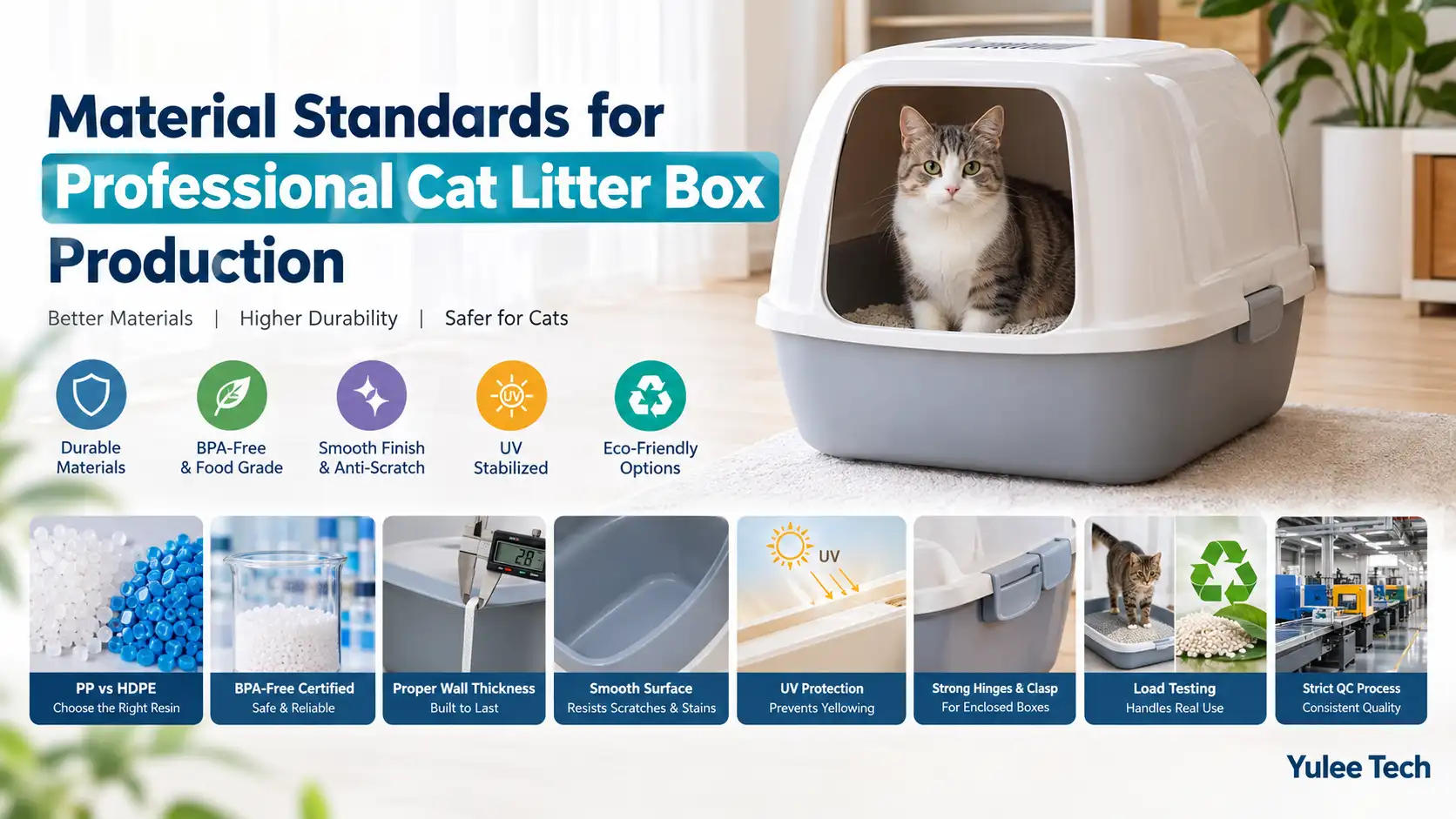
Polypropylene (PP) vs High-Density Polyethylene (HDPE) — Which Plastic Holds Up Better
Most litter boxes are molded from either polypropylene or high-density polyethylene, and the two behave differently under daily stress. Polypropylene offers strong rigidity and holds its shape well under repeated scooping and digging pressure, which makes it the more common choice for structural basins. HDPE flexes more under impact, which can help it resist cracking from drops but makes it more prone to warping over time if wall thickness isn’t calibrated correctly. Buyers should ask which resin a factory uses and why, since the answer often reveals whether a manufacturer is optimizing for cost or for long-term structural performance.
BPA-Free and Food-Grade Plastic Certification Requirements
Certification claims are only useful when they’re backed by actual testing documentation. A genuinely BPA-free litter box should come with test reports confirming the resin meets food-grade or equivalent safety standards, not just a label stating the claim. Buyers selling into regions with strict chemical safety regulations, such as the EU’s REACH framework or the FDA’s food-contact standards, should request these reports directly rather than assuming a supplier’s marketing copy reflects verified compliance.
Wall Thickness and Injection Molding Tolerances
Wall thickness directly determines how a litter box holds up to repeated impact, weight, and flexing over its lifespan. A basin molded too thin in stress-prone areas, particularly corners and the base, cracks far sooner than one built to a consistent, properly calibrated thickness. Tight injection molding tolerances matter here too, since inconsistent wall thickness across a production batch signals a mold that isn’t dialed in correctly, which usually shows up as random early failures across a shipment rather than a uniform lifespan across units.
Surface Finish and Anti-Scratch Coating
Interior surface quality affects far more than appearance. A smooth, properly finished surface resists scratching from digging and scooping, and scratches matter because they create micro-grooves where odor-causing bacteria and staining can accumulate over time. A rough or poorly finished mold leaves a surface more vulnerable to this kind of wear from day one, which is why surface finish quality is worth inspecting closely on any sample before committing to a bulk order.
UV Stabilization for Colorfastness
Litter boxes stored near windows, displayed in retail settings with strong lighting, or used outdoors for feral or barn cat programs are exposed to UV light that can cause plastic to yellow, fade, or become brittle over time. UV-stabilizing additives mixed into the resin during production slow this degradation significantly. Buyers sourcing for markets with strong sunlight exposure or retail environments with bright display lighting should confirm whether a manufacturer includes UV stabilizers as a standard part of their resin formulation.
Odor and Stain Resistance Through Material Additives
Beyond surface finish, some manufacturers incorporate antimicrobial additives directly into the resin to slow bacterial growth on the plastic surface itself. This differs from surface coatings, since the additive works throughout the material rather than just on the outer layer, which means it continues offering some protection even as the surface wears from daily scooping. Buyers should ask specifically whether odor and stain resistance comes from an additive in the resin, a surface treatment, or both, since this affects how the protection holds up over the product’s lifespan.
Hinge, Lid, and Clasp Material Durability (for Covered/Enclosed Boxes)
Covered and enclosed litter boxes introduce moving parts that the main basin doesn’t have, and these components often use a different, more flexible plastic grade than the rigid basin itself. Hinges and clasps need enough flexibility to withstand repeated opening and closing without snapping, which means they can’t simply be molded from the same rigid resin as the structural base. Buyers should confirm that hinge and clasp components have their own material specification and stress testing, since these small parts are frequently the first point of failure on an otherwise well-built enclosed design.
Weight-Bearing and Structural Load Testing
A litter box needs to support a cat’s full weight during entry, digging, and extended standing without flexing or cracking under that pressure. Manufacturers with proper testing protocols apply a rated load to the basin and lid, if applicable, and measure deflection and failure points before finalizing a design for production. Buyers sourcing boxes intended for larger cat breeds or multi-cat households should ask directly what weight rating a design has been tested against, rather than assuming standard sizing automatically covers heavier use cases.
Recyclability and Eco-Friendly Material Options
Demand for recycled polypropylene and other eco-conscious material options has grown as more retailers look to build sustainability into their product lines. Recycled resin can perform comparably to virgin material in many cases, though buyers should confirm whether a manufacturer blends recycled content with virgin resin to maintain structural consistency, since fully recycled batches can sometimes show more variability in strength and finish quality. Understanding this tradeoff upfront helps buyers set accurate expectations for both durability and marketing claims.
Quality Control Checkpoints During Production
A properly run production line includes checkpoints throughout the manufacturing process rather than a single inspection at the end. This typically includes wall thickness sampling across a batch, seal and hinge integrity checks on enclosed designs, and colorfastness testing to confirm UV stabilization is working as intended. Buyers should ask a manufacturer to walk through their specific QC checkpoints and how frequently batches are sampled, since a factory that can describe this process in detail is a stronger signal of consistency than one offering only a general assurance of quality.
Why Material Choice Defines Product Lifespan
Every decision covered in this guide, from resin selection to wall thickness to hinge material, compounds into how long a litter box actually performs before it needs replacing. A box built on the right material specifications doesn’t just look good on day one; it holds its shape, resists staining, and keeps functioning correctly years into daily use. Buyers who understand these standards are better equipped to evaluate a manufacturer on substance rather than surface-level claims.
Partner With a Manufacturer Who Gets the Details Right
Choosing a professional cat litter box manufacturer means backing every design decision with real material data, not just marketing claims. Yulee Tech builds litter boxes to the resin, thickness, and QC standards covered in this guide, from certified BPA-free plastic through final batch testing. Reach out to discuss specifications, request samples, and get a quote for your next bulk order.