The global pet supply business is expanding rapidly because millions of families now keep indoor felines. Corporate buyers, online shop owners, and bulk distributors need a reliable cat toys supplier to stay competitive. Finding the right production partner allows your business to acquire high-quality goods at excellent wholesale prices. When you build a direct relationship with a factory, you get lower manufacturing costs, better material safety, and exclusive custom designs. This detailed commercial handbook explains how to find retail inventory, verify factory safety, manage bulk shipping, and protect your profit margins.
Sourcing pet products requires a clear, strategic plan. Many new wholesale buyers make the mistake of choosing a partner based only on low price quotes. Cheap manufacturing often leads to broken plastic parts, toxic materials, and long delays at shipping ports. Your company must focus on strict factory inspections, high-grade raw materials, and international safety certifications. If your inventory is safe and durable, your brand will build long-term trust with retail consumers. This manual provides a complete step-by-step roadmap to successfully buy feline playthings in bulk directly from global manufacturers.
01. Where to Find Reliable Cat Toy Manufacturers Internationally
Finding the right manufacturing facility is the first step in building a successful pet supply business. B2B buyers have three primary options to discover and connect with international producers.
1.1. B2B Wholesale Marketplaces
Online business platforms are the fastest way to view thousands of product catalogs instantly. Websites like Alibaba, Global Sources, and Tradewheel list hundreds of factories that specialize in pet supplies. When you use these digital platforms, you must filter your search results carefully. Always select suppliers that hold verified business statuses, such as Gold Supplier or Verified Manufacturer. These specific badges show that a third-party company has visited the factory and checked their business licenses. You can use the internal messaging systems to request price quotes and ask about production schedules.
1.2. Attending Global Pet Trade Shows
Meeting manufacturers face-to-face is an excellent way to evaluate product quality and build strong partnerships. Large commercial exhibitions gather thousands of pet product vendors under one roof. The China International Pet Show (CIPS) in Asia, the Global Pet Expo in North America, and Zoomark in Europe are the top trade shows for corporate procurement teams. Visiting these events lets you touch the materials, test electronic components, and talk directly with factory owners. You can negotiate prices instantly and view upcoming product designs before they hit the global market.
1.3. Working with Specialized Pet Product Sourcing Agents
If your company lacks an overseas purchasing office, hiring a local sourcing agent is a smart choice. Sourcing agents live near the industrial manufacturing hubs. They speak the local language, understand the regional business culture, and know which factories build the best items. An experienced agent will visit the assembly lines, check raw materials, and monitor packaging quality for you. They charge a small percentage commission on your total order value, but they save you money by preventing costly product defects.
02. Evaluating the Production Capabilities of a Cat Toy Factory
Before you sign a purchasing contract, you must confirm that the factory has the right machinery and labor force to handle large orders. Different product categories require completely different industrial setups.
2.1. Plastic Injection Molding Capacity for Track and Ball Toys
Plastic items like rolling tracks, treat towers, and puzzle boxes require large injection molding machines. These industrial machines melt raw plastic pellets and force the liquid into steel molds under high pressure. When you evaluate a factory, ask about the number of injection molding machines they operate. A factory with ten or more automated machines can produce tens of thousands of units every week. Ensure the factory uses virgin ABS plastic instead of cheap recycled plastic scraps. Virgin ABS plastic has high impact resistance, so the finished items will not crack when felines drop them.
2.2. Automated Stitching Lines for Heavy-Duty Plush Mice and Kickers
Plush mice, kicker pillows, and stuffed birds require extensive sewing and assembly work. High-volume factories use automated stitching lines and laser fabric cutters to maintain consistent dimensions. Look for factories that use double-needle lockstitch machines. Double-needle stitching creates incredibly strong seams that prevent the internal fabric filling from leaking out. If a plush item has weak seams, a feline will rip it open within minutes, which creates a dangerous choking hazard. The assembly area must remain clean and dry to keep dust away from the soft fabrics.
2.3. Sourcing Raw Materials
A premium manufacturer must have a secure supply chain for safe raw materials. For scratching posts and climbing towers, the factory should source thick, natural sisal fiber rope that smells like natural wood. For dental chew items, the factory must use food-grade thermal plastic rubber (TPR) that contains zero chemical odors. If your product line includes catnip items, the factory must source fresh, organic catnip leaves from certified agricultural suppliers. High-quality catnip retains its strong scent for months inside sealed retail packaging.
🐾 Expanding Your Pet Supply Inventory?
Many buyers who source cat toys in bulk also look to diversify their catalog with feeding accessories. A dependable wholesale cat feeder line can complement your existing toy inventory, giving retail buyers a broader range of products to choose from under the same shipping consignment.
03. Step-by-Step Bulk Sourcing Process for Feline Products
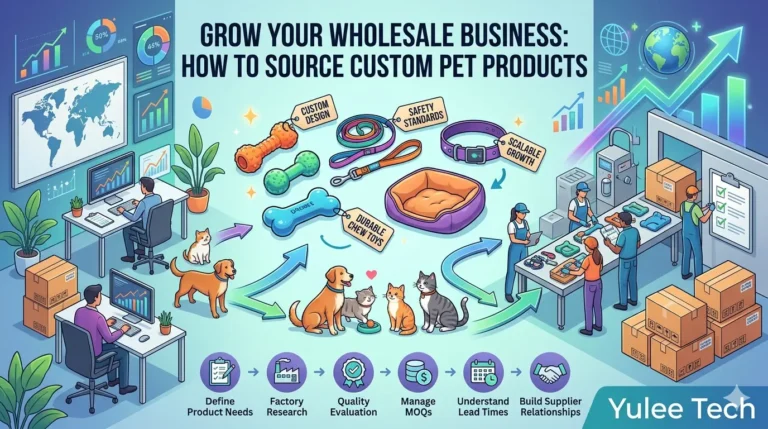
Buying inventory in large quantities requires a clear communication plan to avoid production mistakes. Follow these specific steps to manage your bulk order smoothly.
3.1. Sending a Clear Product Specification Sheet to Factories
Never ask a manufacturer for a price quote without providing exact details. Create a professional product specification sheet for every item you want to buy. This document must list the exact dimensions, weight, material composition, and color codes using the Pantone system. Specify the thickness of the fabrics, the battery capacity for electronic models, and the exact packaging layout. Providing a detailed specification sheet prevents misunderstandings and gives the factory a clear blueprint to follow.
3.2. Requesting and Testing Pre-Production Samples
Always order a physical pre-production sample before you send a deposit payment. The factory will build a few prototype units based on your specification sheet. Once the samples arrive at your office, you must test them aggressively. Give the items to real pets to see how the materials hold up under biting and scratching. Drop the plastic items onto hard concrete floors from a height of two meters to check for cracks. If you find any design flaws, inform the factory immediately so they can adjust the mass production assembly line.
3.3. Negotiating Minimum Order Quantities and Tiered Pricing
Every factory sets a Minimum Order Quantity (MOQ) to cover machine setup costs. For plastic injection molded items, the MOQ is usually around one thousand pieces per color because changing steel molds takes hours of manual work. Fabric items generally have lower limits, starting at five hundred units per style. You can negotiate lower per-unit prices by increasing your order size. Ask the manufacturer to provide a tiered pricing chart that shows the cost savings for five thousand, ten thousand, and twenty thousand units.
04. Safety Certifications and Quality Control Inspections
Commercial buyers face serious legal liabilities if they import dangerous pet products. You must enforce strict safety rules and test every batch of goods before they leave the factory.
|
Target Market |
Required Certification | Testing Focus |
Potential Compliance Risk |
|
North America |
ASTM F963 |
Non-toxic pigments, heavy metal limits | Lead contamination in surface paint |
|
European Union |
EN71 Parts 1, 2, and 3 |
Mechanical durability, flame resistance | Loose small parts, sharp plastic edges |
|
Global Markets |
REACH / RoHS |
Chemical phthalate restrictions, safe plastics | Recycled industrial plastic toxins |
4.1. Verifying Chemical Safety Compliance
Felines lick, chew, and carry their playthings in their mouths for hours. Because of this behavior, the materials must remain free from toxic chemicals. Your production partner must provide official test reports from independent testing laboratories like SGS, TÜV Rheinland, or Intertek. These certificates prove that the fabrics, plastics, and dyes contain zero lead, cadmium, or harmful phthalates. Check the dates on the certificates to ensure the factory runs these laboratory tests every single year.
4.2. On-Site Physical Inspections
Do not rely only on paper certificates. Hire a third-party quality control firm to inspect the goods on the factory floor while production is ending. The inspector will perform pull tests on wands, teaser strings, and attached feathers. They use a digital force gauge to pull the small components with a force of five kilograms for ten seconds. If a feather or plastic bell detaches during the pull test, the batch fails. This test ensures that small components will not break off and cause an animal to choke.
4.3. Implementing AQL 2.5 Defect Thresholds Before Final Payment
Your purchase contract should state that the order must pass an Acceptable Quality Limit (AQL) 2.5 inspection. The quality inspector will pull random shipping boxes from the warehouse and check a specific number of finished units. They look for visual defects like loose threads, dirty spots, crooked labels, and malfunctioning electronics. If the total number of defective items exceeds the allowed AQL threshold, the factory must stop the shipment. The manufacturer must fix the problems at their own expense before you send the final financial balance.
05. Shipping Logistics and Custom Packaging Solutions
Managing the final leg of the sourcing journey requires smart packing methods and careful coordination with freight forwarders.
5.1. Optimizing Container Space with Flat-Pack Retail Boxes
Sea freight rates depend heavily on the volume of your cargo. Plush items compress easily, but large plastic tracks and scratching towers take up massive amounts of space inside a shipping container. You can save thousands of dollars in shipping costs by designing flat-pack retail boxes. Ask your factory to pack multi-piece plastic items unassembled inside slim boxes. Include a clear, simple instruction sheet inside the box so retail store customers can assemble the product at home easily. Flat packaging allows you to fit up to forty percent more units inside a standard forty-foot container.
5.2. Preventing Moisture Damage in Sea Freight for Plush and Sisal Goods
Cargo ships spend weeks on the open ocean, where humidity levels are extremely high. High moisture can cause mold to grow on organic cotton fabrics, plush mice, and natural sisal rope. Protect your bulk investment by requiring the factory to pack every individual retail item inside a sealed plastic polybag. Place large bags of silica gel desiccant inside every master shipping carton to absorb ambient moisture. The master shipping cartons must use heavy, five-layer corrugated cardboard to prevent the boxes from collapsing when stacked high inside the shipping container.
Conclusion
Sourcing feline play products directly from international factories is an excellent way to grow a profitable commercial business. To build a resilient supply chain, B2B procurement managers must move away from generic suppliers that focus only on low costs. A successful sourcing strategy requires selecting verified production facilities, writing clear product specification sheets, and enforcing strict laboratory material testing. By implementing automated assembly line checks and using professional third-party inspectors, you eliminate the risk of importing defective inventory. Investing time in proper material selection, product development, and container optimization protects your business from high product return rates. High-quality construction satisfies retail buyers, builds long-term brand equity, and ensures consistent commercial success in the competitive pet supply industry.
Partner with a Trusted Pet Industry Manufacturer
Are you ready to scale your commercial pet inventory with durable, high-margin product lines? Finding an industrial manufacturing partner that understands international safety laws, advanced plastic molding techniques, and fast bulk shipping schedules is the key to expanding your distribution network. Our advanced manufacturing facility specializes in automated sewing lines, premium raw material procurement, and precise quality control systems to satisfy the exact requirements of modern corporate purchasing departments.
Yulee Tech company provides complete end-to-end production solutions for bulk distributors, international retail chains, and premium e-commerce brands. We handle every phase of your commercial supply chain, including custom mold design, strict pull-test verification, and custom retail packaging development. Contact our commercial sales department today to receive a detailed wholesale price quote, review our laboratory test certificates, or order a physical pre-production product sample.