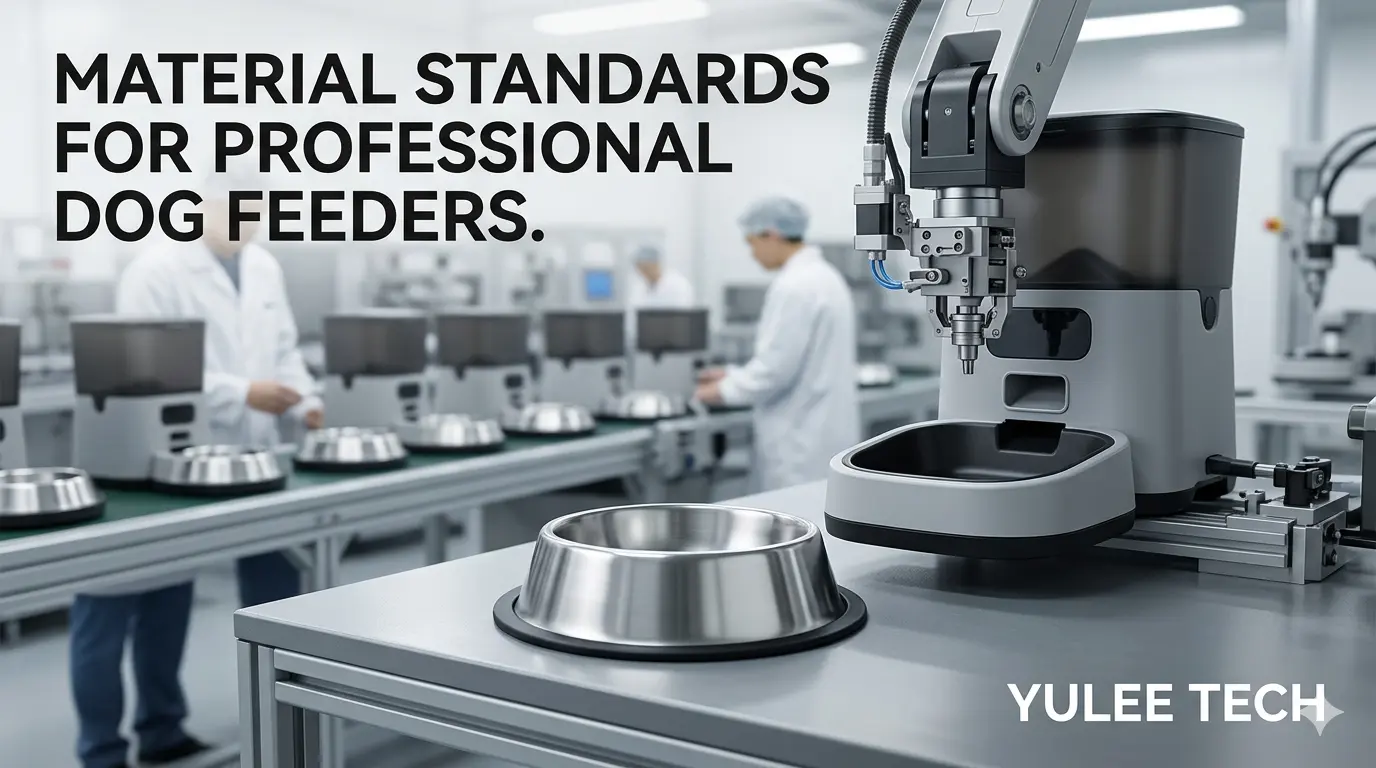
Choosing the right components for building high-quality pet products is a vital step for any factory. When we talk about professional dog feeder production units, the focus stays on safety, strength, and long-term use. Manufacturers must follow strict rules to make sure every bowl or automatic feeder is safe for animals. These units handle large volumes of raw materials like 304-grade stainless steel and food-grade plastics. Each material has a specific job in the assembly line. For example, some parts need to be hard to break while others must be flexible. Finding a high-quality wholesale dog feeder for global supply chains requires a deep understanding of these material grades to avoid low-quality outputs.
Professional production units prioritize materials that do not react with food or water. This means the chemical structure of the bowl stays stable even when it gets hot or cold. If a factory uses sub-standard metal, the feeders might rust quickly. This creates a health risk for pets and ruins the reputation of the brand. High-level production also looks at how easy it is to clean these items. A smooth surface prevents bacteria from growing in small cracks. By following global standards, factories can produce items that last for many years in a busy home or kennel. We focus on original facts like the nickel content in steel and the melting points of safe plastics to define these standards.
Core Material Categories Used in Dog Feeder Manufacturing
Every dog feeder starts with a selection of raw materials. Production units usually divide these into three main groups based on their physical properties and costs.
Stainless Steel
Stainless steel is the most popular choice for professional feeders. It is a metal alloy that contains iron, carbon, and chromium. The chromium creates a thin layer on the surface that stops rust. In a factory setting, workers mold this steel into different shapes using large press machines. It is a heavy material which helps the bowl stay in one place while a dog eats. It does not soak up smells and it can handle very high temperatures without losing its shape.
Food-Grade Plastics
Plastics offer more variety in design and color. Modern production units use specific types of plastic that are safe for contact with food. These are not the same as the plastic used for toys or tools. Food-grade plastic is stable and does not leak chemicals into the dog’s meal. It is also lighter than metal, which makes it easier to ship in large quantities. Factories often use injection molding to create complex parts for automatic feeders using these plastics.
Silicone Components
Silicone is a flexible, rubber-like material. It is often used for the base of the feeder to stop it from sliding on the floor. Some modern feeders are made entirely of silicone because it can fold up for travel. It is a very tough material that can go from the freezer to the dishwasher without any damage. In professional units, silicone must meet high purity standards to ensure it is non-toxic for pets.
Stainless Steel Standards for Long-Term Durability
When a production unit selects steel, they must look at the grade of the metal. Not all shiny metals are the same.
304 vs 201 Grade Comparison
The two most common types of steel in pet product manufacturing are 304 and 201. Grade 304 is the gold standard for pet safety. It contains a high amount of nickel, which makes it very resistant to corrosion. Even if the bowl stays wet all day, it will not rust. Grade 201 is a cheaper option. It looks similar but has less nickel and more manganese. Over time, 201 grade steel can develop small rust spots, especially if it touches salty food. Professional units prefer 304 because it keeps the product safe for a much longer time.
Corrosion Resistance Requirements
Corrosion is the biggest enemy of metal feeders. Since dogs drink water and eat moist food, the material is always under stress. A professional production unit tests the metal by exposing it to salt spray or high humidity. This test shows how well the protective layer works. If the steel passes these tests, it means the product can stay in a damp kitchen or outside without breaking down. This resistance is a key part of the quality control process.
Surface Finishing & Hygiene
The way the steel feels is just as important as what is inside it. After the bowl is shaped, it goes through a polishing phase. This is called surface finishing. A mirror-like finish or a brushed matte finish makes the bowl look good, but it also serves a functional purpose. A smooth surface has no tiny pores where germs can hide. If the finish is rough, food particles get stuck, and bacteria start to grow. High-quality units use mechanical polishing to make the steel perfectly smooth.
Food-Grade Plastic Compliance in Production Units
Manufacturing units that focus on plastic dog feeders must follow very specific safety rules. Plastic is a versatile material, but not every type belongs in a pet bowl. Professional factories use advanced machines to melt and mold these materials into durable shapes.
BPA-Free Requirements
BPA stands for Bisphenol A, which is a chemical used to make certain types of plastic hard. In the past, many factories used it without knowing the risks. Now, professional production units strictly avoid BPA. When a dog eats from a bowl containing this chemical, it can slowly leak into their food. This leads to health problems over time. High-quality factories test their raw plastic pellets to make sure they are 100% BPA-free. This keeps the dog safe and helps the product meet modern safety laws.
Polypropylene (PP) Standards
Polypropylene, or PP, is a favorite material for dog feeder production. It is a tough plastic that can handle high heat. When a factory makes an automatic feeder, they often use PP for the main body and the food storage tank. This material is strong enough to survive being knocked over by a large dog. It also has a high melting point, which means it stays safe in a hot dishwasher. Professional units select high-density PP to make sure the walls of the feeder do not crack under pressure.
Virgin vs Recycled Material
In the world of manufacturing, there is a big difference between virgin plastic and recycled plastic. Virgin plastic comes straight from the refinery and has never been used before. It is pure and very strong. Recycled plastic comes from old products that are melted down again. While recycling is good for the earth, some recycled plastics contain old dyes or chemicals that are not safe for food. Professional dog feeder production units usually use 100% virgin material for any part that touches food. This maintains a high level of purity and strength.
Silicone Material Specifications for Functional Parts
Silicone has become a very important material in modern pet product design. It acts like rubber but handles extreme conditions much better.
Food-Grade Certification
Before a factory uses silicone, they must verify its grade. Industrial silicone is for tools and gaskets, but food-grade silicone is for items that touch meals. Professional units check for a high level of silica in the mix. This makes the material inert, meaning it does not react with food or water. A certified silicone bowl will not give off any weird smells or tastes, which is important because dogs have a very sensitive sense of smell.
Heat & Chemical Resistance
One of the best things about silicone is how it reacts to heat. A production unit can create a travel bowl that a owner can boil to kill germs. It does not melt or release fumes at high temperatures. It also resists chemicals found in dish soaps. This means the material stays clear and flexible even after hundreds of washes. In a professional setting, this resistance is tested by placing the material in a high-heat oven for several hours to check for any changes in weight or shape.
Flexibility & Longevity
Silicone parts need to be flexible but they should not tear easily. Production units use a process called compression molding to create silicone mats and collapsible bowls. The material must be able to fold thousands of times without showing white stress marks or cracks. This long life makes it a great investment for pet owners. Factories measure the “shore hardness” of the silicone to find the perfect balance between being soft for the dog and tough for the environment.
Global Safety Certifications for Material Compliance
For a production unit to sell products globally, they must prove their materials are safe. This is done through third-party testing and certifications.
FDA Standards
The Food and Drug Administration (FDA) in the United States sets very high bars for materials. Even though they focus on humans, pet products often follow these same rules. A professional dog feeder factory sends samples of their steel and plastic to labs to check for heavy metals like lead or mercury. If the material passes, it receives an FDA-compliant status. This tells the customer that the product is safe for daily use.
LFGB Certification
LFGB is a German standard that is even stricter than the FDA in some areas. It is widely recognized across Europe. It tests how much material migrates from the bowl into the food. If a production unit earns an LFGB certificate, it means their products are of the highest possible quality. This certification is very important for brands that want to export to high-end European markets.
EU Food Contact Regulations
The European Union has a set of laws known as Regulation (EC) No 1935/2004. This law says that materials must not change the composition of the food in an unacceptable way. Professional production units keep detailed records of every batch of material to show they follow these rules. This traceability is a key part of modern manufacturing management.
Mechanical Strength & Impact Resistance Testing
A dog feeder needs to be more than just safe; it must be strong. Dogs can be rough, and products often fall off counters or get stepped on.
Load Bearing Capacity
Automatic feeders often hold large amounts of heavy dry food. The production unit must test the base of the feeder to see how much weight it can carry without bending. If a feeder holds 10 kilograms of food, the plastic legs must be able to support at least double that weight to be safe. Engineers use hydraulic presses to apply pressure and find the breaking point of the material.
Drop & Stress Testing
Factories perform drop tests to simulate real-life accidents. They drop a finished feeder from a height of one or two meters onto a hard floor. A high-quality unit expects the product to survive without any major cracks. They also perform stress tests on moving parts, like the lid of an automatic feeder. They might open and close the lid 5,000 times using a machine to make sure the hinge does not fail.
Wear Resistance
Over time, a dog’s tongue and teeth can wear down the surface of a bowl. Production units use abrasive pads to rub the material and see how much it scratches. Stainless steel usually performs the best in this category. Hard plastics are also tested to make sure they do not create sharp edges if they do get scratched. This keeps the dog’s mouth safe during every meal.
Chemical Stability & Pet Safety Requirements
The way a material behaves when it stays in contact with water for a long time is a critical safety factor.
Non-Toxic Composition
A professional production unit analyzes the molecular structure of their materials. They make sure there are no phthalates or heavy metals hidden in the dyes used for coloring. Non-toxic means the material is safe even if a puppy decides to chew on the edge of the bowl. This peace of mind is what separates professional units from low-quality factories.
Odor Resistance
Dogs have a sense of smell that is much stronger than ours. If a plastic bowl smells like chemicals, a dog might refuse to eat. Production units select materials that are “low-odor.” They also test how much the material soaks up the smell of old food. Stainless steel is excellent because it is non-porous and does not hold onto smells. High-quality plastics are treated to have a similar effect.
Reaction to Food & Water
Some foods are acidic, like those containing citrus or certain preservatives. If a bowl is made of poor-quality metal, these acids can cause a chemical reaction. This might change the taste of the water or lead to rust. Professional units test their materials with different types of pet food to make sure the surface stays perfect. This stability is a sign of a well-made product.
Hygiene & Cleanability Standards in Material Selection
Cleanliness is the most important part of pet health. A feeder that is hard to clean will soon become a home for dangerous germs.
Anti-Bacterial Properties
Some modern production units add silver ions to their plastic mix. Silver is a natural enemy of bacteria. This helps keep the surface clean between washes. While this is an extra step, it adds a lot of value to the product. It stops a slimy film from forming on the bottom of the water bowl.
Smooth Surface Design
The design of the feeder must work with the material. A professional unit avoids sharp corners or deep grooves where food can get stuck. Even if the material is high-quality, a bad design makes it unhygienic. Smooth curves allow the owner to wipe the bowl clean in one motion. This design philosophy is part of the “Sanitary Design” standard used in professional manufacturing.
Dishwasher Compatibility
Most pet owners want to throw their dog’s bowl in the dishwasher. Production units must use materials that can handle the high heat and strong detergents of a dishwasher. They test the materials to see if they become brittle or lose their color after many cycles. If a material warps at 70 degrees Celsius, it is not fit for a professional dog feeder.
Environmental & Sustainability Considerations
Modern factories are now looking at how their work affects the planet. This is becoming a major part of material standards.
Recyclable Materials
Professional units try to use materials that can be recycled at the end of their life. Stainless steel is 100% recyclable and can be melted down to make new products forever. Many plastics like PP are also easy to recycle. Factories often mark the bottom of the feeder with a recycling symbol so the customer knows how to dispose of it properly.
Eco-Friendly Alternatives
Some units are experimenting with bio-plastics made from corn or bamboo fibers. These materials break down faster in the environment. While they are not as common as steel yet, they represent the future of pet product manufacturing. A professional factory stays updated on these new materials to offer more choices to their clients.
Waste Reduction in Production
A high-standard unit does not just care about the product; they care about the scrap material. They use “closed-loop” systems where any extra plastic from the molding process is collected and reused immediately. This reduces waste and makes the factory more efficient. It also helps keep the cost of the final product lower for the customer.
Material Quality Verification & Documentation
Trust in manufacturing comes from paperwork and proof. A factory cannot just say their material is good; they must show it.
Lab Testing Reports
Every batch of raw material that enters a professional production unit comes with a lab report. This is often called a Certificate of Analysis (COA). It lists exactly what is in the material. The factory keeps these reports on file for years. If there is ever a problem with a product, they can look back at the records to see which batch of material was used.
Material Traceability
Traceability means being able to follow a product from the store shelf back to the original pile of raw metal or plastic. Professional units use batch numbers on their packaging. This system is vital for safety. If a specific material is found to be faulty, the factory can quickly identify which feeders are affected and inform their customers.
Supplier Transparency
A professional factory only works with trusted suppliers. They visit the locations where the steel is made to check the working conditions and the quality of the furnaces. This transparency creates a strong supply chain. When a factory knows exactly where their material comes from, they can stand behind the quality of their dog feeders with confidence.
Role of Material Standards in Bulk Production Consistency
Consistency is the hallmark of a professional production unit. Every item in a box of one thousand should look and perform exactly the same.
Batch Uniformity
When a factory produces thousands of units, they must maintain the same color and strength. If the material standards are loose, the first hundred bowls might be strong while the last hundred are thin. Professional units use automated dosing machines to mix colors and additives. This makes sure every single feeder meets the same high standard.
Defect Rate Reduction
High material standards lead to fewer mistakes. If a factory uses cheap, inconsistent plastic, the machines will jam more often. This creates defects like air bubbles or rough edges. By using top-tier materials, a professional unit keeps its defect rate below 1%. This saves time and ensures that the customer always receives a perfect product.
Long-Term Product Reliability
Reliability is built at the material level. A feeder that works perfectly on day one should still work on day one thousand. By following strict standards for wear and chemical resistance, production units create products that become a staple in the pet owner’s home. This reliability builds brand loyalty, which is the most valuable asset for any manufacturer.
Choosing the Right Material Mix for Different Feeder Types
Not every feeder uses the same materials. The choice depends on how the dog will use the product.
Automatic Feeders
These are complex machines with motors and sensors. The production unit uses a mix of materials here. The outer shell is usually high-impact plastic for durability. The internal storage bin must be food-grade plastic to keep the kibble fresh. Any screws or springs inside are made of stainless steel to prevent rust from the moisture in the food.
Slow Feed Bowls
Slow feed bowls have complex ridges and valleys to slow down a dog’s eating. These are usually made from heavy plastic or silicone. The material needs to be very thick so the dog cannot chew off the internal parts. Production units use high-pressure injection molding to make sure these complex shapes are solid and have no hollow spots.
Elevated Feeding Systems
Elevated systems often use a combination of a metal or wooden stand with stainless steel bowls. The stand must be treated with water-resistant coatings so it does not rot when water splashes on it. The bowls must fit perfectly into the cutouts. Professional units measure these to the millimeter to prevent the bowls from rattling while the dog eats.
Conclusion
Building a professional dog feeder is a task that requires great attention to detail. From the initial selection of 304-grade stainless steel to the final check of BPA-free plastic certifications, every step matters. A production unit must focus on materials that are safe, durable, and easy to clean. Following global standards like FDA and LFGB is not just about following laws; it is about protecting the health of pets who rely on these products every day. High-quality manufacturing also looks at the mechanical strength and chemical stability of every component. By testing for impact resistance and ensuring the material does not soak up odors, factories create feeders that last for years. This commitment to quality builds a strong bridge between the manufacturer and the pet owner. When materials are handled with care and precision, the final product is more than just a bowl; it is a safe and reliable tool for animal care.
Partnering for Quality Production
When you are looking to scale your business, finding a reliable manufacturing partner is the most important step. A factory that understands the deep technical details of material standards can help you stand out in a crowded market. You need a team that takes quality control seriously and documents every step of the process. This allows you to focus on growing your brand while the technical side of production stays in expert hands.
Working with Yulee Tech gives you access to high-level expertise in pet product manufacturing. We focus on using the best materials and following all global safety rules to create products that pet owners trust. Our production units are designed to handle large orders with perfect consistency and care. Whether you want to buy a high-quality wholesale cat feeder or a durable dog feeder for your global inventory, we are ready to help you bring that vision to life.