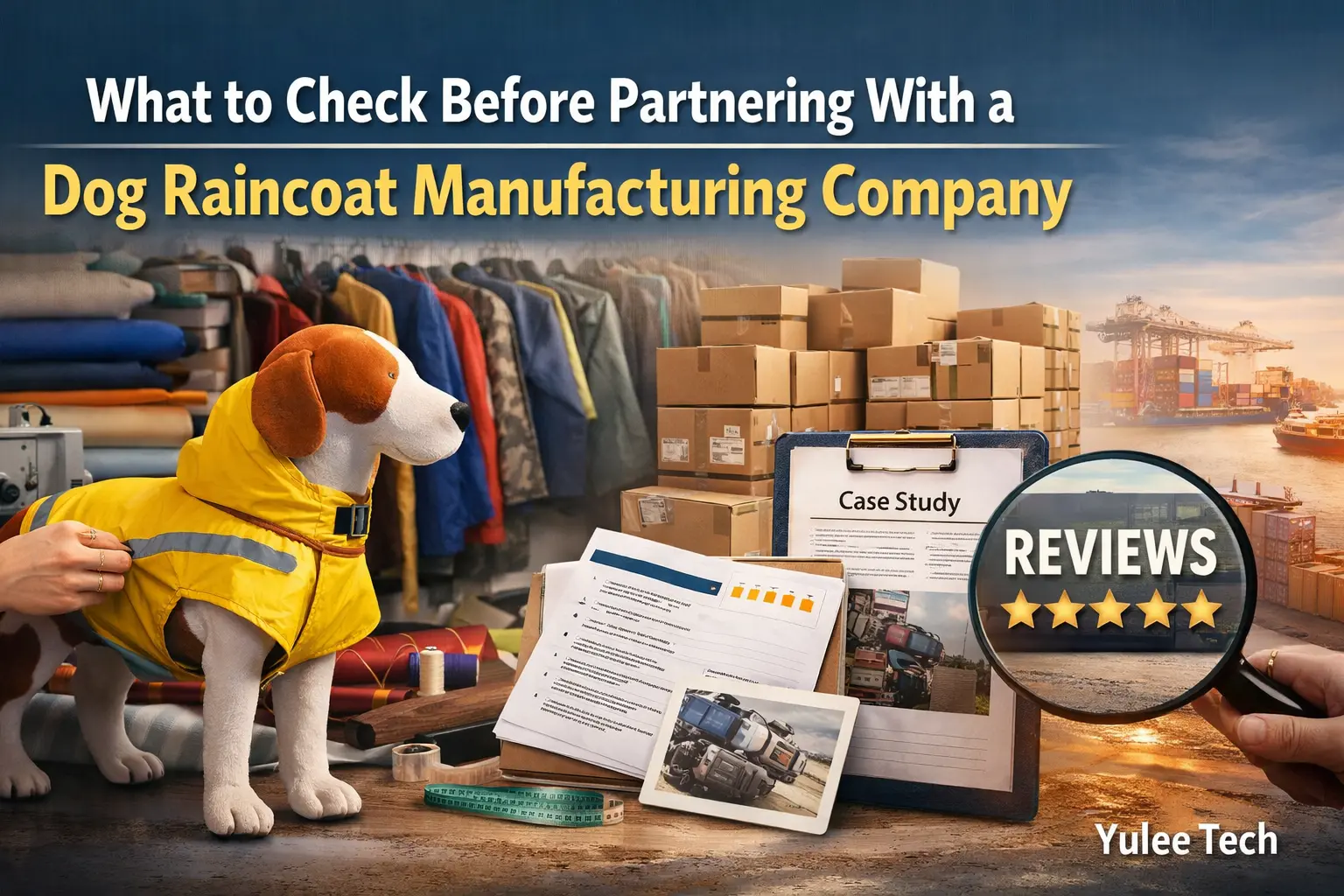
Businesses that sell pet products often work with factories to produce items at scale. A dog raincoat is a practical product that pet owners buy during rainy seasons and outdoor activities. Retail stores, distributors, and online sellers usually rely on manufacturers that can produce consistent quality and handle wholesale demand. Choosing the right production partner becomes important because product quality, safety, delivery time, and branding options all depend on the factory you select.
Before working with any supplier, buyers need to review several factors such as manufacturing experience, material quality, production capacity, and testing standards. A professional dog raincoat manufacturer should have clear processes for fabric selection, stitching quality, product inspection, and export logistics. These factors help buyers avoid delays, product defects, and communication issues.
This guide explains the key things wholesale buyers should review before starting a partnership with a dog raincoat production company. Each section covers the practical checks that help brands, distributors, and pet product retailers select a reliable manufacturing partner.
Understanding the Manufacturer’s Experience in Pet Apparel Production
Experience in pet apparel production plays a major role when choosing a manufacturing partner. Factories that work with pet clothing for many years usually understand product design, fabric behavior, and dog comfort better than general garment producers.
Years of Experience in Dog Clothing Manufacturing
A factory that has produced dog clothing for several years usually has stronger production systems. Long experience often means the factory has handled different product styles such as dog jackets, dog raincoats, reflective rainwear, and seasonal pet clothing.
Buyers should review:
- How many years the factory has produced pet apparel
- Types of dog clothing products manufactured
- Export markets the factory has served
- Production history for pet rainwear
Factories with longer experience often improve their sewing methods, fabric handling, and size pattern development. This background reduces production mistakes and helps maintain product consistency in large orders.
Specialization in Pet Rainwear Products
Some factories produce many types of garments, while others focus on pet products. A manufacturer that specializes in dog rainwear usually understands the specific requirements of waterproof clothing for animals.
Pet rainwear production requires attention to several details:
- Waterproof fabric selection
- Adjustable strap design
- Neck and chest fitting for dogs
- Reflective elements for outdoor safety
- Lightweight structure for dog comfort
Specialized manufacturers often build product knowledge through repeated production. This allows them to recommend better materials and designs for brands that want to develop durable rainwear for dogs.
Evaluating Dog Raincoat Product Quality and Material Standards
Product quality determines how well a dog raincoat performs in real conditions. Pet owners expect rainwear that protects dogs from rain while staying comfortable during walks or outdoor activities.
Types of Waterproof Fabrics Used in Dog Raincoats
Waterproof fabric is the foundation of a raincoat. Manufacturers usually choose materials that resist water while staying lightweight.
Common fabrics used in dog rainwear include:
| Fabric Type | Key Feature |
|---|---|
| Polyester with waterproof coating | Lightweight and durable |
| Nylon waterproof fabric | Strong water resistance |
| PU coated fabric | Flexible and smooth surface |
| Water resistant laminated fabric | Good protection during heavy rain |
Buyers should ask the manufacturer which fabrics they use and how those materials perform during rain exposure. Some fabrics include inner coatings that improve water resistance without making the product heavy.
Stitching Strength and Long Term Durability
Strong stitching keeps the raincoat intact during regular use. Dogs often move actively during walks, so seams must handle stretching and movement.
Important stitching factors include:
- Reinforced seams around neck and chest areas
- Tight stitch density for fabric strength
- Secure strap attachment points
- Clean seam finishing
Factories that maintain strong sewing standards often deliver products that last longer in daily use.
Safety and Comfort Features for Dogs
Pet comfort is an essential part of rainwear design. A raincoat should protect from rain without limiting movement.
Important comfort features include:
- Adjustable belly straps
- Soft inner lining
- Breathable fabric layers
- Reflective strips for night visibility
- Lightweight structure
Design features like adjustable closures help the raincoat fit dogs of different body shapes. Reflective elements improve safety when owners walk their dogs during low light conditions.
Reviewing Manufacturing Capacity and Production Capability for Wholesale Orders
Wholesale buyers need factories that can handle production at scale. A supplier may produce high quality samples but struggle when orders become larger.
Monthly Production Volume
Production volume shows how many units a factory can produce in a typical month. Buyers often request this information to understand whether the manufacturer can support growing demand.
Factors that influence production volume include:
- Number of sewing workers
- Production lines dedicated to pet apparel
- Factory equipment
- Production workflow
A factory with higher monthly output usually has a more organized production structure.
Ability to Handle Large Bulk Orders
Bulk orders are common in wholesale pet product supply. Buyers should confirm whether the factory has enough workforce and machinery to handle large order quantities.
Key checks include:
- Production line capacity
- Staff availability during peak seasons
- Ability to increase production during high demand periods
Factories that handle large orders often maintain better planning systems for raw materials and labor scheduling.
Lead Time for High Volume Orders
Lead time refers to the time required to complete an order from production start to shipment. Buyers should confirm the expected production timeline before placing orders.
Typical lead time depends on:
- Order quantity
- Fabric availability
- Production schedule
- packaging preparation
Clear lead time communication helps buyers plan product launches and retail inventory.
Checking Customization and Private Label Options for Pet Brands
Many wholesale buyers want custom branding for their products. Private label manufacturing allows businesses to sell products under their own brand name.
Logo Printing and Brand Identity Options
Manufacturers often offer several branding options that allow buyers to display their logo on the product.
Common logo options include:
- Printed logos
- Embroidered logos
- Rubber logo patches
- woven labels
Branding elements help pet product businesses build brand recognition in the market.
Custom Sizes and Dog Raincoat Design Flexibility
Dog breeds vary in size and body shape. Manufacturers should offer multiple size options or custom size charts.
Typical size ranges include:
- Small dog sizes
- Medium dog sizes
- Large dog sizes
- Adjustable designs for better fitting
Some factories also provide design adjustments such as hood shape changes, strap placement, or reflective pattern layout.
Packaging Customization for Wholesale Distribution
Packaging is important for retail presentation and product protection during shipping.
Custom packaging options may include:
- printed poly bags
- retail boxes
- barcode labels
- brand inserts
These elements help retailers present products clearly in stores or online marketplaces.
Assessing Factory Quality Control and Product Testing Procedures
Quality control helps prevent defective products from reaching buyers. Reliable factories maintain inspection procedures during production and before shipment.
Waterproof Performance Testing Methods
Rainwear products must pass waterproof testing. Factories often perform tests to confirm that the fabric blocks water effectively.
Common testing methods include:
- water spray tests
- fabric waterproof rating checks
- seam sealing inspection
These tests help verify that the raincoat performs well in real rain conditions.
Inspection Process Before Shipment
Final product inspection allows factories to detect defects before shipping.
Inspection steps often include:
- checking stitching quality
- reviewing size measurements
- examining fabric surface
- verifying logo placement
This inspection process helps maintain consistent quality across large orders.
Verifying Certifications and Compliance Standards for Pet Products
Product safety and compliance standards are important for international markets. Buyers should confirm whether the manufacturer follows recognized industry standards.
International Product Safety Standards
Pet apparel materials should meet safety requirements, especially when products are exported to global markets.
Important safety considerations include:
- non toxic fabric coatings
- safe dyes and color treatments
- skin friendly materials for pets
These standards protect pets from harmful materials.
Factory Compliance and Export Certifications
Factories that export products usually hold certain certifications related to manufacturing practices and product safety.
Buyers often request documents such as:
- manufacturing compliance certificates
- product testing reports
- export documentation
These documents show that the factory follows recognized manufacturing practices.
Analyzing Pricing Structure and Cost Transparency in Manufacturing
Pricing structure helps buyers understand the full cost of production before placing orders.
Bulk Pricing Tiers for Wholesale Buyers
Manufacturers often provide different pricing levels based on order quantity.
Example structure:
| Order Quantity | Price Level |
|---|---|
| 500 units | standard wholesale price |
| 1000 units | reduced price |
| 5000 units | large order discount |
Bulk pricing allows businesses to improve profit margins when ordering larger volumes.
Additional Costs Such as Customization Packaging and Shipping
Some costs appear separately from the base product price.
Additional costs may include:
- logo printing
- custom packaging
- export documentation
- shipping fees
Clear pricing breakdown helps buyers plan their purchasing budget accurately.
Reviewing Communication Process and Buyer Support
Communication quality often determines how smooth a business partnership becomes.
Responsiveness to Buyer Inquiries
A reliable manufacturer usually responds quickly to buyer questions about product specifications, order status, and design changes.
Fast communication helps solve issues before they affect production schedules.
After Sales Support and Issue Resolution
After shipment, buyers may still need support regarding product questions or shipment concerns.
Factories that provide strong buyer support often help with:
- product clarification
- replacement discussions
- future order planning
Good communication helps build long term partnerships.
Checking Logistics Support and Global Shipping Capability
International buyers depend on factories that understand export procedures and global shipping methods.
Available Shipping Methods for International Orders
Manufacturers may offer several shipping options depending on order size and delivery urgency.
Common shipping methods include:
- sea freight for large bulk shipments
- air freight for urgent deliveries
- courier shipping for samples
Buyers should confirm which shipping method fits their delivery schedule and budget.
Experience With Export and Global Distribution
Factories that regularly export products usually understand international logistics requirements.
Important export experience includes:
- customs documentation
- packaging standards for international transport
- coordination with freight forwarders
Export experience reduces the risk of delays during international shipping.
Reading Buyer Reviews and Verifying Previous Client Experience
Past buyer feedback often reveals how a manufacturer performs during real business partnerships.
Testimonials From Wholesale Buyers
Reviews from other wholesale buyers can highlight important factors such as product quality, delivery reliability, and communication quality.
Buyers often search for feedback related to:
- production quality
- order accuracy
- delivery timelines
Positive reviews suggest the factory has maintained good relationships with past clients.
Case Studies or Previous Export Clients
Some manufacturers share case studies that show how they supported other brands or distributors.
These case studies may explain:
- product development projects
- large export orders
- custom branding projects
Such examples help buyers understand the factory’s experience working with international clients.
Conclusion
Selecting the right manufacturing partner plays a major role in the success of a pet product business. Wholesale buyers should evaluate several factors before starting cooperation with a factory. Manufacturing experience, product quality, waterproof fabric selection, and strong stitching are key elements that determine the durability of a dog raincoat. Buyers should also review the factory’s production capacity, bulk order handling ability, and lead time to avoid supply problems during peak seasons.
Customization options, branding flexibility, and packaging design help businesses build their own identity in the market. At the same time, proper quality control procedures and waterproof testing confirm that products perform well during real use. Certifications and compliance standards show that the manufacturer follows recognized production practices and safety guidelines.
Pricing transparency also helps buyers understand the full cost of manufacturing, including customization and shipping expenses. Reliable communication and strong buyer support improve the overall partnership experience. Finally, logistics capability and export experience reduce the risk of shipping delays for international orders. By reviewing all these factors carefully, businesses can build a stable partnership with a factory that supports long term growth in the pet apparel market.
Work With a Reliable Partner for Dog Raincoat Production
Businesses that want to expand their pet product line often look for manufacturers that understand both product quality and wholesale supply requirements. A factory that provides consistent materials, flexible customization options, and reliable production capacity can support brands that want to build a strong presence in the pet apparel market.
If you are looking for a trusted manufacturing partner for bulk dog raincoat supply, Yulee Tech offers production support for wholesale buyers, distributors, and pet product brands. Their experience in pet apparel manufacturing and private label production helps businesses develop rainwear products designed for real market demand.
[…] 1. Checklist Before Partnering With a Dog Raincoat Manufacturing Company […]